Potluck or Shared Menu? Choosing a Shape for a Neighbourhood Meal
Choose a potluck or shared menu for a neighborhood meal, then invite contributions clearly so planning feels fair and guests know how to take part.
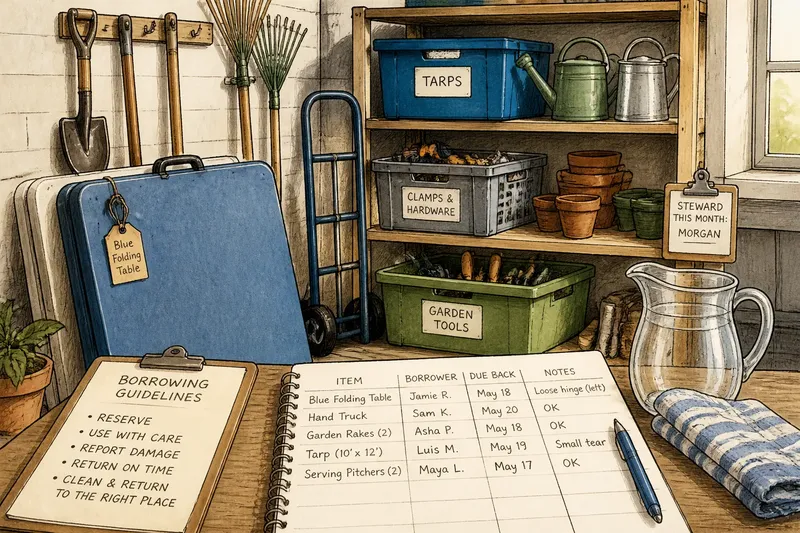
You’ve borrowed folding chairs from the community room, and a neighbor asks what to bring. Before answering, decide what kind of meal you’re hosting. A potluck or shared menu gives people different ways to contribute, and that choice shapes the planning from the first invitation.
A potluck lets guests bring dishes of their choosing. A shared menu assigns contributions toward a meal planned by the host: one person brings bread, another a salad, and another fruit. Neither format is automatically easier or more welcoming. The right one depends on who is organizing, what the gathering needs, and how clearly people can be invited in.
What should the meal make easy?
Start with the purpose and setting, not the food list. Is this a relaxed neighborhood get-together where people can arrive at different times, or a sit-down meal where everyone should have something to eat at once? Will the group have tables, serving utensils, and room to keep dishes organized? A simple meal in a courtyard has different needs from a shared dinner in a small meeting room.
A potluck suits a gathering where variety and informal participation matter more than a planned sequence of dishes. Guests can choose something familiar, and a late decision may still turn into a useful contribution. The trade-off is that the host may receive several desserts and little food for the main part of the meal.
A coordinated menu is helpful when the meal needs a more intentional mix or the serving space is limited. It gives the host a chance to request a few complementary contributions. It also asks the host to do more organizing before guests arrive, especially if people need to choose from a list or coordinate timing.
How do you choose between a potluck and a shared menu?
Consider these questions before settling on a format:
- How much planning can you take on? Choose a potluck if you want to keep advance coordination light. Choose a shared menu if you can make assignments and keep track of replies.
- How predictable should the meal be? A shared menu offers a clearer picture of what will be available. A potluck leaves more to chance, which may suit a casual gathering.
- How much space is available? A crowded room may call for a compact menu with fewer dishes. A potluck can work well if the group has room to set out an assortment.
- Do guests need an especially clear invitation? A defined contribution can help someone who is unsure what to bring. A potluck can still be clear if the invitation gives examples and welcomes people who cannot bring food.
There is no need to build a complicated menu to signal care. A short plan is often easier to understand and maintain than a long list of dishes, special requests, and follow-up messages.
What should the invitation say?
Name the format directly. “Bring a dish to share” describes a potluck, but it leaves open whether a store-bought item, drinks, or a non-food contribution is welcome. A shared menu should tell people how to claim a contribution and what categories still need filling.
Include the practical details that help someone decide: the meal’s date and place, when food should arrive, whether serving utensils are available, and who to contact with a question. Keep the request friendly and specific. If bringing food is optional, say so plainly rather than leaving guests to guess.
For a shared menu, give a short set of choices instead of asking everyone to suggest a complete dish. “Could you bring bread, a salad, or fruit?” is easier to answer than “What do you think we should eat?” Guests can still offer an alternative, but the host has provided a useful starting point.
How can you share planning without assigning too much?
Make contributions easy to claim and easy to update. A paper list at a regular neighborhood gathering can work for a small group; a simple message thread may be more convenient when people are spread across several buildings. Use one place to record decisions so the host does not have to reconcile notes from separate conversations.
Ask for categories rather than elaborate recipes. For example, a shared menu might need a filling main dish, a side, bread, and something sweet. Let people decide how to meet the request, and invite them to mention if they need an easy or low-cost option. The goal is a usable meal, not matching presentation or culinary effort.
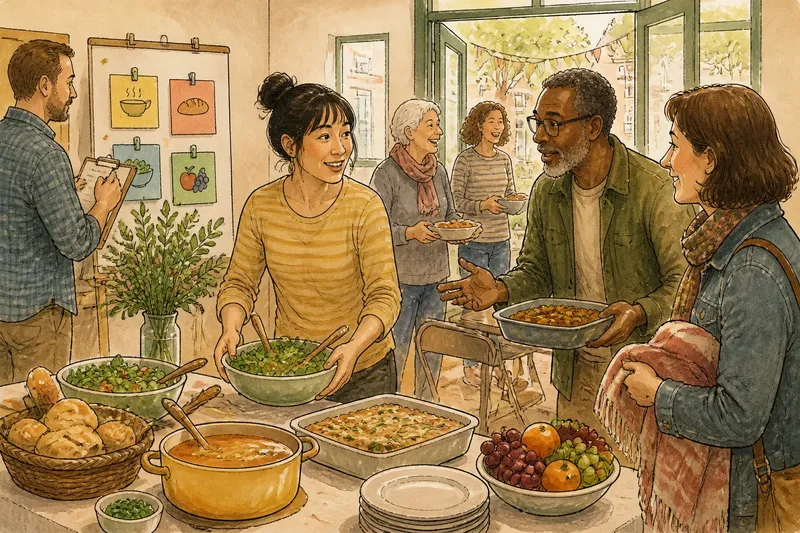
Say you’re arranging dinner in a neighborhood room with limited counter space. You invite four neighbors to claim soup, bread, a simple side, or fruit, and you ask everyone else to come as they are. The host can see what the meal is likely to include, while guests know how to contribute without being asked to create a dish from scratch.
How can a potluck avoid leaving the host with a guessing game?
A potluck can remain open while still giving people a nudge. Offer a few broad suggestions—such as a main dish, a side, fruit, or a drink—and ask guests to mention what they plan to bring. That small amount of coordination helps the host notice gaps without turning the gathering into a tightly managed menu.
Make room for contributions beyond cooking. Someone may bring napkins, help arrange chairs, or stay to clear the tables. Mention those options in the invitation so that people who cannot prepare food still have a clear way to participate. If the host prefers food-only contributions, explain that gently rather than assuming everyone will interpret the request the same way.
What is not worth the effort? Chasing every guest for an exact ingredient list or asking people to prepare dishes to a uniform standard. Those demands add work without making a neighborhood meal feel more shared.
What should you plan for before guests arrive?
Whichever format you choose, think through the moment food reaches the table. Set aside a place for each contribution, have a marker and cards available for dish names, and make serving spoons easy to find. If the room has limited surfaces, ask guests to bring dishes that can sit together on one table or invite a few people to help arrange the food.
Ask guests to mention common dietary needs or ingredients they want others to know about, without requesting private health details. Labeling dishes can help people choose for themselves. For questions involving food handling, follow the relevant label, manufacturer guidance, or local rules; keep the host’s invitation focused on practical information rather than promises about what a dish can accommodate.
Keep the arrival plan simple. Tell people whether to bring food ready to serve or whether there is a place to set it down. A shared menu can include a rough order for contributions if the meal depends on timing. At an informal potluck, a clear drop-off spot may be all the coordination the group needs.
Which format is easier for different kinds of guests?
A potluck offers choice, which can be comfortable for someone who already knows what they like to cook. It may be less comfortable for a first-time guest who worries about bringing the wrong thing. Examples of welcome contributions and a note that attendance does not depend on bringing food make the invitation easier to accept.
A shared menu can reduce guesswork, but assigning a contribution to every person can feel like an obligation. Leave room for guests to attend without bringing anything. You can also invite people to select a small task, such as setting out cups, if they would like another way to help.
For a mixed group, combine the formats: plan a simple base menu, then invite optional additions. The host knows there will be food to begin with, and guests can still bring something if they want to. Keep the distinction explicit so people understand which contributions are requested and which are simply welcome.
What questions do hosts ask about a neighborhood meal?
Should guests bring food if they are only staying briefly?
Say in the invitation that people may come and go without bringing a dish. For a shared menu, keep assigned contributions optional unless a guest has volunteered for one.
What if several people offer the same dish?
For a potluck, let guests know that duplicates are fine or suggest a few different categories to spread contributions naturally. For a coordinated menu, update the list and offer the next person a different choice.
Can store-bought food be part of a potluck?
Yes, if that suits the gathering; say so in the invitation so nobody feels expected to cook. A shared menu can also include easy-to-pick-up items, such as bread or fruit.
How do you keep a shared menu from feeling like an assignment?
Offer a small set of choices, make contributions optional, and welcome practical alternatives. Guests should understand that the meal is a reason to gather, not a test of how much they can provide.
How do you close the loop after the meal?
Thank people for what they brought or did, and tell them where reusable serving dishes can be collected. If there was a particular snag—such as a crowded food table—mention a simple adjustment for next time, like using a second surface. Keep any future invitation open to a different format; one gathering does not need to establish a permanent rule.
For a neighborhood meal, the best choice is the one guests can understand and the host can reasonably support. A potluck gives people more freedom to bring what suits them; a shared menu gives the host a clearer way to shape the meal. Name the format, make room for different kinds of contribution, and let that clarity do much of the welcoming.