The Annual Gathering Is Not a Tradition by Itself
An annual gathering becomes a meaningful tradition when neighbors share its purpose and repeat small acts that help everyone feel they belong.
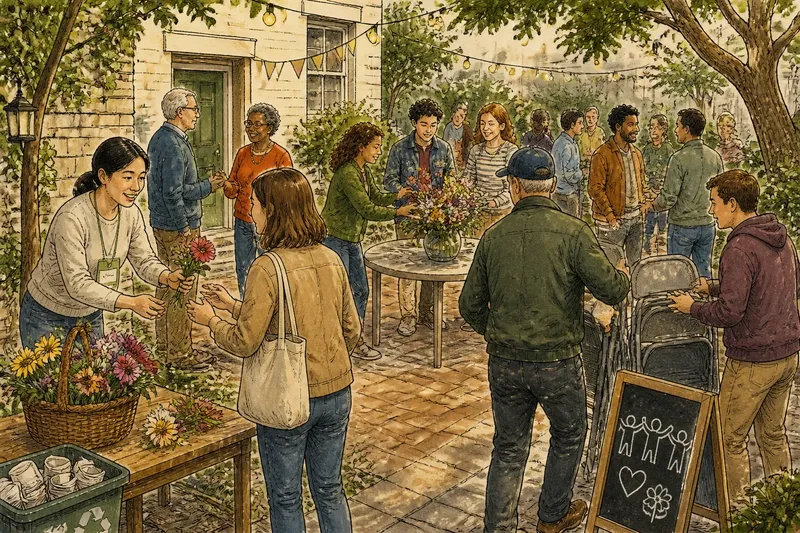
The folding chairs are stacked, the last paper cups are in the recycling, and someone has already asked whether the neighborhood gathering is happening again next year. An annual gathering can bring people together, but a date on the calendar does not make it a tradition. The meaning comes from what people do together, and from the small acts they choose to repeat.
That distinction matters when an event starts to feel like a chore or a show put on by the same few organizers. Rather than adding more decorations or activities, look for the snag: a purpose people cannot name, rituals that exclude newcomers, or too much work resting on too few shoulders. Then try one small adjustment that gives the gathering a shared identity.
Why does the gathering feel like another event?
A familiar date and venue make an occasion recurring; they do not tell people why it matters. If neighbors arrive, eat, and leave without a shared moment or purpose, the gathering may feel interchangeable with any other community event.
Often, the purpose exists only in the organizers’ heads. One person hopes to welcome new residents, another wants to celebrate a local garden, and someone else is mainly trying to raise funds. Those aims may fit together, but attendees cannot feel a purpose they have never heard or experienced.
Try putting the gathering’s purpose into a plain sentence, then let that sentence shape one moment in the event. If the aim is to help neighbors recognize one another, make space for brief introductions or a shared activity that gives people a natural reason to talk. Avoid a long speech explaining the occasion. A purpose should be visible in what people do, not only in what a flyer says.
What if the old ritual has lost its meaning?
A repeated act can become an empty routine when nobody remembers why it began. The same welcome announcement, group photo, or closing song might still suit the gathering, but repetition alone is not a reason to preserve it. Ask what the act gives people now: a chance to contribute, a moment of recognition, or a marker that the gathering belongs to the neighborhood.
If there is no clear answer, invite attendees to help reshape it. Keep the part that feels useful and change the rest. A welcome might become a shared greeting at the door, with a volunteer introducing people who arrive alone. A closing moment might invite everyone to name one thing they hope the group keeps doing. Small changes can renew an act without making the gathering feel unfamiliar.
Not every detail needs a ritual. Matching outfits, elaborate decorations, and a tightly scripted program are not worth the effort if they add pressure without helping people connect. The useful test is simple: does this repeated act make it easier for someone to take part, understand the occasion, or feel remembered?
How can a ritual welcome people who are new?
Long-running traditions can unintentionally become private signals. Regulars know when to arrive, where to stand, and what to say; a first-time guest may see a circle of people who already seem to belong. The problem is not that the newcomers lack commitment. They have not yet been shown how to join.
Choose a ritual with an easy entry point. A shared greeting, a simple contribution to a community display, or a chance to help set out chairs can let a person participate without needing background knowledge. Make the invitation explicit and optional. Nobody should have to perform enthusiasm or explain why they came.
Say you organize a yearly courtyard gathering where longtime neighbors always bring a flower for a central table. New residents arrive unsure whether they should bring one too. You could place a small basket of spare flowers beside the entrance and ask a volunteer to invite anyone who wishes to add one. The expected result is a visible way to join that does not depend on knowing the custom in advance.
Why do the same few people carry the whole event?
When setup, hosting, and cleanup all fall to familiar volunteers, the gathering may depend on their stamina more than on a shared commitment. It can still feel warm to attendees, while quietly becoming exhausting for the people who make it happen.
Look for small tasks that can be shared without creating a confusing committee. One person can open the room, another can greet arrivals, and a few neighbors can help return chairs. Offer clear, bounded choices instead of asking vaguely for “more help.” People are more likely to take part when they can see what is needed and when their contribution ends.
Let the ritual itself distribute the work. A recurring moment such as a group welcome can be hosted by a different neighbor each year, while the basic format stays familiar. Rotate responsibility only with consent; passing someone a task in public can feel more like pressure than an invitation. A shared tradition should make room for people to contribute in different ways, including attending without taking a job.
What if attendance changes from year to year?
A smaller crowd does not automatically mean the gathering has failed. Weather, schedules, venue access, and competing local events can all change who is able to come. Trouble starts when organizers treat headcount as the only evidence that an occasion matters, then keep expanding the program to draw a larger audience.
Instead, notice what the gathering is meant to sustain. If its purpose is to help neighbors feel familiar with one another, a few genuine conversations may serve it better than a packed room with no time to connect. Ask attendees what they would miss if the event disappeared, and what they would gladly simplify. Their answers can point to a durable ritual worth keeping.
For a practical adjustment, preserve one recognizable moment even if the venue or schedule changes. A brief shared welcome can travel from a community hall to a park shelter, provided people can still hear and join it. Familiarity can live in an action, not only in a place or a large turnout.
How can you tell whether a tradition needs to change?
Use a few direct questions after the gathering, while details are still fresh. They can be asked in conversation, on a paper card, or through a short message to the neighborhood group.
- What moment made the purpose of the gathering easiest to understand?
- Was there a point when you wanted to join but did not know how?
- Which repeated act felt welcoming, and which felt confusing or unnecessary?
- Did the work seem shared fairly among the people who organized it?
- What is one small thing you hope stays the same next time?
These questions are more useful than asking only whether people enjoyed themselves. A pleasant event may still be hard to enter or burdensome to organize. Look for patterns in the answers, but do not treat one person’s preference as a rule for the whole neighborhood. A brief conversation with those affected can help distinguish a ritual that needs a gentler invitation from one that no longer serves the group.
What questions do neighbors ask about annual traditions?
How many times does an event need to repeat to become a tradition?
There is no fixed number. A gathering begins to feel traditional when people recognize its shared purpose and know how they can take part, even if the form changes.
Should an annual gathering keep every old custom?
No. Keep customs that help people connect or express the occasion, and invite the group to revise those that feel confusing, burdensome, or irrelevant. Familiarity is useful when it welcomes people rather than closing the circle.
Can a small gathering still have a meaningful tradition?
Yes. A simple repeated act can matter even when attendance varies, as long as it reflects something the people present value. A shared welcome or a moment of thanks can give a modest gathering its own character.
How do you start a tradition without making it feel forced?
Begin with an action that fits the gathering’s purpose and is easy to join, then ask attendees how it felt. Leave room for people to pass, and let the group decide whether the act deserves another turn.
A useful annual gathering is not preserved by copying every detail from the previous year. It lasts through a shared purpose and a few repeated acts that people can understand, join, and adapt. When planning the next annual gathering, choose one moment that expresses why neighbors come together, then make its invitation clear enough for someone new to take part.